

Unlocking 30% additional production through Integrated Activity Planning

Integrated Activity Planning helped a Middle Eastern upstream operator raise production on existing infrastructure by cutting avoidable downtime and aligning field work, logistics, and maintenance onto one plan.
Starting point
The upstream oil producer had operations across multiple remote fields. Installed capacity suggested the system could sustain materially higher output, but recurring downtime, clashing shutdowns, and short-notice break-in work meant that potential was rarely realised.
Each function planned work in its own silo. Drilling and well intervention, maintenance, projects, subsurface, HSE, and logistics all kept separate spreadsheets and calendars. Contractors and heavy equipment were booked independently, and bed space at camps was reserved speculatively. Planned activities repeatedly overrode each other, turning routine work into unplanned outages and production deferment.
There was no single integrated plan, no consistent rule for what work could enter the schedule, and no disciplined process for changing it once published. Leadership could see volatility and lost barrels in the production reports, but not which planning failures and clashes were driving them.
The senior operations leadership set a clear challenge: unlock materially higher production by cutting avoidable downtime and bringing discipline to how work was planned, sequenced, and executed across the fields.
Approach
The operator engaged an external consulting team to design and embed an Integrated Activity Planning model. Bhuvan Maingi, now Managing Partner at Strathen Group, served as lead strategy consultant on the engagement.
The work started with a baseline of planning performance, mapping how each function built plans, how work entered and exited the schedule, and how often activities were deferred or cancelled. Schedule compliance was low, with frequent break-ins and recurring conflicts over shared resources such as cranes, nitrogen units, and specialist crews.
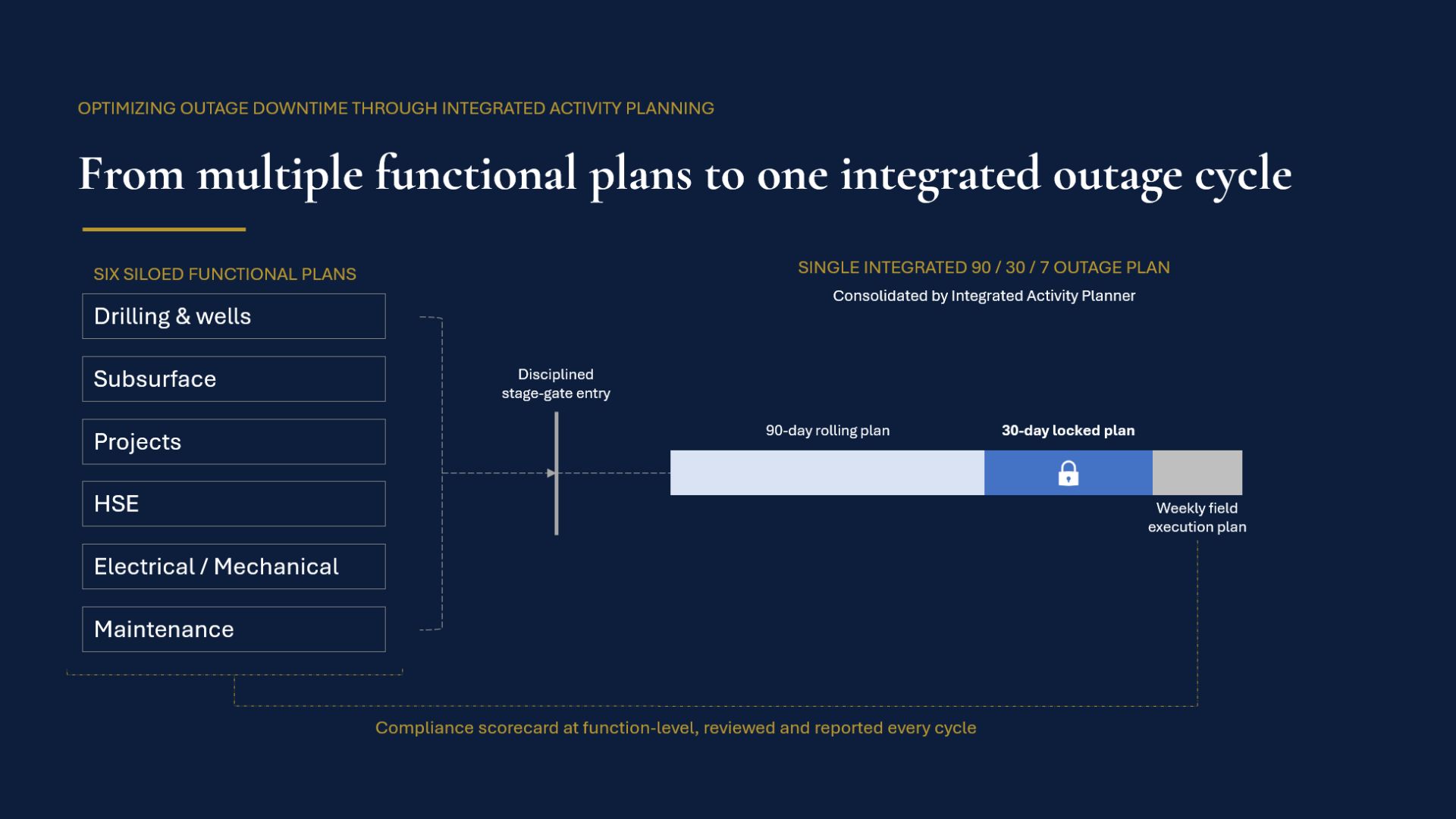
From there, he designed a simple but rigorous integrated planning rhythm:
- 90-day Functional Activity Plans (FAP)
Each function was required to maintain a forward-looking FAP as its single system of record. To enter the plan, activities had to meet stage-gate criteria covering scope, owner, dates, materials and long-leads, contractor and equipment bookings, production impact and deferment value, POB and bed needs, risks, and key interdependencies.
- Integrated Activity Planner and 90-day Plans (IAP)
A dedicated Integrated Activity Planner role was created to consolidate all FAPs into one integrated plan. In weekly integration meetings, the planner and function leads identified and resolved schedule overlaps, resource conflicts, production-impact clashes, and bed constraints until a single feasible plan was agreed.
- Firm 30-day window and weekly plans
Once published, the near-term portion of the IAP was treated as firm. Any change required leadership approval with a documented reason code, turning break-ins from a habit into a managed exception. Weekly plans were derived from the firm window and used by sites for execution and daily briefings.
To make discipline visible, he designed a Compliance Scorecard that tracked planned versus executed activities, cancellations, break-ins, and non-compliance by function and reason. This gave leadership a clear monthly view of where the plan was breaking and why.
The IAP model was integrated with other operational levers. Bed planning rules were aligned to the IAP so accommodation and logistics matched the work plan. Production forecasts were tied into the integrated planning horizon so the impact of deferments on throughput was visible ahead of time, not just after month-end.
Finally, he delivered IAP workshops for leaders, planners, and supervisors. These clarified roles through RACIs, walked through the new stage-gate standards, and ran simulated integration meetings so teams could practice challenging work that was not ready to enter the plan.
Instead of chasing more projects and equipment, leadership focused on planning and executing the work they already did in an integrated way, every cycle.
Outcome
The IAP program gave the operator a practical path to lift stable production by roughly 30% using the infrastructure it already had. By aligning maintenance, wells, projects, and logistics into a single plan and locking the near-term window, the operator reduced avoidable downtime and protected production windows that had previously been lost to last-minute conflicts.
In the first full cycle after training and scorecarding, schedule compliance improved from 40% to 67%, the strongest performance recorded to date. As compliance rose, unplanned overlaps, short-notice break-ins, and unnecessary shutdowns fell. Shared resources were used more efficiently, and critical production periods became less vulnerable to last-minute changes.
For leadership, the Compliance Scorecard and integrated planning cadence created a new operating rhythm. Monthly reviews shifted from explaining lost production after the fact to actively managing deferment risk ahead of it, identifying which functions were driving non-compliance and what needed to change in planning discipline or stage-gate rigour.
Operationally, the benefits extended beyond throughput. Coordinated POB and bed planning improved roster accuracy across sites, strengthening safety drills and emergency readiness. Shutdown and turnaround planning became more predictable, with maintenance and projects working from the same integrated forward view for the first time.
The real shift was as much cultural as operational. Integrated Activity Planning turned the schedule from a loose collection of functional intentions into a single, owned commitment for the field.
For upstream leaders, the lesson was that meaningful production growth does not always require new infrastructure; it requires an integrated plan, firm near-term commitments, and the discipline to run them cycle after cycle.
This work guides Strathen Group how to think about integrated planning, using firm planning windows, stage gates, and compliance scorecards to unlock production from existing assets rather than defaulting to new infrastructure.



